
Coin investing depends on timing. Price cycles shift, demand rises and slows, and supply appears in waves. Some coins strengthen when a series matures; others lose attention when the collector base changes. Surface quality, population trends, and buyer behaviour influence outcomes more than age or mintage figures.
If you are new to both collecting and investing, you can rely on coin identification, but apps show the basic details and even in market price. However, investment decisions require a broader view: price history, grade pressure, demand stability, and long-term patterns within each series.
Today, we would like to check how investors make decisions that avoid unnecessary risk. Timing is not speculation; it is observation. Coins behave predictably when you know which signals matter and how to compare them.
Why Timing Matters in Coin Investing
Coin markets react to supply flow and collector attention. When inventory floods a category, prices weaken. When certain dates disappear from circulation, buyer competition rises. Timing becomes easier to understand when these movements are separated into simple drivers.
A quick view of how price trends form:
| Market Condition | Typical Effect |
| High supply, weak demand | Slow sales, softer prices |
| Low supply, active demand | Competitive bidding, fast recovery |
| Uncertain demand | Price stagnation |
| Stable collector base | Long-term growth potential |
Coins do not move randomly. Each series develops its own rhythm: sudden interest, quiet periods, renewed enthusiasm, regional attention, or steady buying from set builders. Investors focus on clear signals rather than seasonal noise.
When to Sell: Recognising the Right Moment
Selling is not about panic. It is about discipline. Some coins reach their natural ceiling; others show early signs of fatigue. A well-timed sale removes risk and keeps capital ready for better material.
Market Indicators That Suggest It’s Time to Sell
- Supply in Your Grade Increases Noticeably
Population updates, auction runs, and dealer stock lists reveal how many comparable pieces exist. When your grade becomes common, premiums shrink. Investors track these shifts because even a small rise in MS or AU populations lowers the advantage of holding the coin.
- Demand Slows for the Series or Date
Some dates lose momentum when set building declines. A coin can remain scarce but still lose liquidity. If a series no longer attracts new collectors, prices flatten. Selling before a stagnation phase protects value.
- The Coin’s Price Exceeds Its Long-Term Average
When a coin trades far above its historical range without strong fundamentals, the position becomes unstable. A sale at the high end locks in profit before the cycle resets.
- The Piece Shows Borderline Grade Features
A coin with marks, weak strike, or uneven surfaces may face a downgrade if resubmitted. Selling before the grade becomes questionable to avoid a future loss. Weak luster or friction along high points often signals that the coin is priced optimistically.
- You Find a Stronger Replacement
Investors upgrade. When a sharper example appears, selling the weaker coin reallocates capital efficiently. Quality always matters more than quantity.
- Example scenario: A collector holds an MS64 Morgan Dollar purchased when populations were lower. Over the next year, grading submissions increases, and MS64 becomes abundant. Prices soften by 10–15%. Selling during the early stage of this shift maintains value and avoids riding the decline.

When to Hold: Identifying Coins Worth Keeping
Some coins reward patience. Their strength comes from collector loyalty, stable populations, and the durability of original surfaces. Holding makes sense when the fundamentals outweigh short-term fluctuations.
Signals That Support Holding a Coin
- Strong eye appeal
Original surfaces remain the most stable driver of long-term value. A coin with clean fields, natural tone, and sharp luster attracts buyers across market cycles. Attractive pieces do not stay on the market long.
- Stable demand inside the series
Coins from active series, such as key Lincoln Cents, Morgan Dollars, early American halves, or notable modern varieties, benefit from consistent buying interest. Demand does not drop suddenly in these categories.
- Secure grade position
A well-struck MS66 or MS67 coin with minimal marks holds its position over time. Market corrections affect borderline pieces first, while confidently graded coins remain resilient.
- The coin strengthens the structure of a set.
Key and semi-key dates often serve as anchors. Collectors rarely replace them because consistent quality is hard to find. Holding them supports long-term planning.
Below is a simple comparison showing how grade security affects timing:
| Grade Position | Recommendation |
| High-end for grade | Hold |
| Market-acceptable but borderline | Monitor |
| Below average for grade | Consider selling |
- Example scenario: A collector owns a 1914-D Lincoln Cent with strong colour, even wear, and stable surfaces. Demand for the series stays strong, populations do not rise, and comparable pieces remain scarce. Holding the coin offers better stability than reinvesting the same amount elsewhere.
What to Buy: Focusing on Material With Long-Term Strength
Investors select coins that combine stable demand, clear identity, and predictable behaviour. Strong material shows consistency across cycles and attracts buyers regardless of temporary market conditions.
Qualities That Define a Strong Candidate
Coins with original surfaces, balanced tone, and honest wear behave more predictably than bright or altered pieces. Clear dates, stable populations, and solid series interest support long-term results. Investors look for coins that remain liquid even when the market cools.
Three Practical Filters Before Buying
Choose coins with steady demand. → Series that attract new collectors create stable pricing.
Check grade pressure. → If a coin is common in MS but scarce in AU, price patterns differ. Know where scarcity begins.
Evaluate long-term liquidity. → A coin that sells reliably under soft lighting at local shows or online markets is safer than a specialised niche piece with a limited audience.
- Short scenario: A collector compares two MS64 Morgans. One has brilliant surfaces but shows hairlines under angled light. The other has a softer tone but original texture. Long-term, the original piece holds value better because stability outweighs immediate brightness.
Market Cycles and How They Influence Decisions
Coin prices move in waves. Some changes come from grading trends; others come from sudden attention to certain dates. Recognising the source of movement prevents unnecessary trades and helps manage expectations.
Why Cycles Form
Release of major collections. → Large auctions increase supply temporarily.
Shift in collector interest. → Media exposure or anniversaries draw attention to specific series.
Population changes. → High numbers of new submissions affect premiums in upper grades.
A quick overview:
| Cycle Trigger | Short-Term Impact |
| Major auction | Temporary price dip |
| Anniversary interest | Sudden demand rise |
| Sharp population growth | Premium decline |
Investors learn to separate temporary movement from structural change. A dip caused by one auction often reverses. A dip caused by long-term oversupply does not.
FAQs
- How do I know if the market is strong enough to support a sale?
Watch supply in your grade and recent auction runs. If similar coins appear more often and hammer prices flatten, the market weakens. Selling early avoids a slow decline.
- What shows that a coin is worth holding longer?
Original surfaces, stable populations, and active demand inside the series indicate strength. These signs support patience because competition remains steady even in slow cycles.
- What helps me recognise when a coin is overpriced?
A price that exceeds the long-term average without clear fundamentals: rare grade, strong demand, or low supply, signals pressure. If the number depends on optimism, the position is fragile.
- How can I judge whether a series is reliable for long-term growth?
Check how often collectors build full sets, how active the market remains across different grades, and whether new buyers enter the category. A strong collector base keeps prices predictable.
- How do population changes affect timing?
If grading submissions rise and more coins reach the same level as yours, premiums decline. If populations stay flat for years, scarcity strengthens, and holding becomes safer.
- How do I measure liquidity before buying?
Review how fast comparable coins sell in recent auctions, local shows, and online markets. Issues with weak liquidity may be scarce, but still difficult to move when you need to sell.
- How can tools support my decisions?
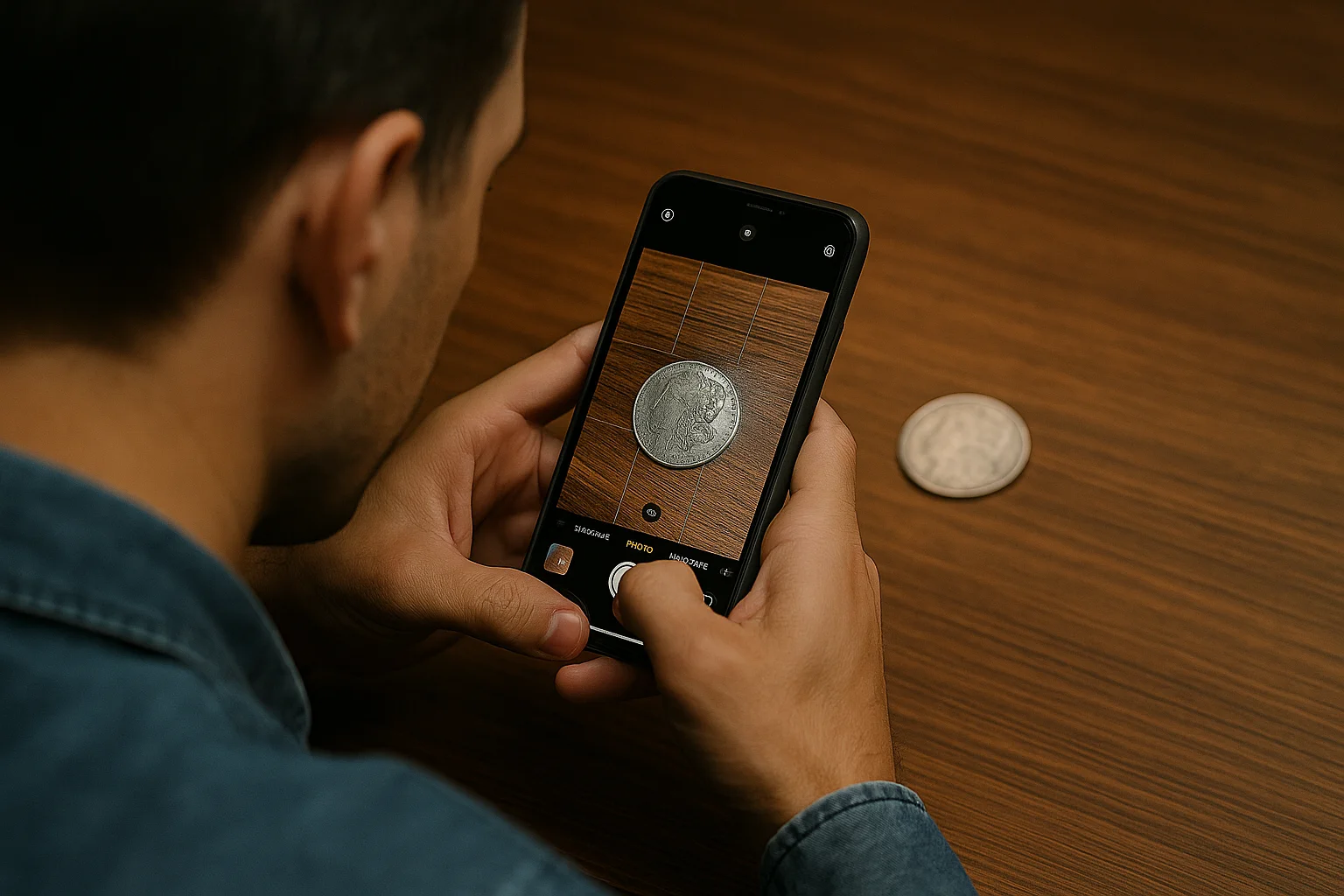
A coin scanner app helps confirm type, date, and design markers and stores consistent photos, but surfaces, grade pressure, and population trends must be checked manually. Digital tools organise the workflow, but your personal judgement defines the decision.
Building a Stable Investment Routine
A clear routine keeps coin investing steady. You sell when the coin no longer holds its ground. You hold when the surface, demand, and grade stay firm. You buy when the piece shows honest quality and fits the pace of the series. With time, these steps turn into instinct, and decisions stop feeling rushed.
Small tools help keep the process organised. A free coin identifier app stores photos and basic details, so nothing gets lost in the mix. Try the Coin ID Scanner app to keep your notes in one place and make it easier to revisit each coin when you need it.